I’ll be honest with you. I didn’t expect it to change how I think.
I expected it to save me time. I expected lower costs and better privacy. I got all of that. But the thing nobody warned me about? Running a local AI agent for 30 days quietly rewired how I approach every single problem I work on; technical, creative, and spiritual.
Let me tell you what actually happened.
The Setup (and Why Local Mattered to Me)
I’m a Linux/Azure Cloud Engineer by day and a one-man AI lab by night. I’ve been building AI systems for years, but I got tired of the leash; API rate limits, cloud costs, privacy concerns about what I was feeding into remote models, and the fragility of depending on someone else’s uptime.
Then on March 2nd, Claude went completely down. Not degraded – down. And while the rest of the world was scrambling, my agent was still running. Right there on my own hardware. That moment crystallized everything.
Local isn’t just a preference. For serious builders, it’s a resilience strategy.
My stack: a dedicated server I call Samaritan running Ollama, with models including Mistral Small 3.1 (24B), Llama 3.1 70B, qwen3-32b and a custom fine-tune. My Mac mini acts as the orchestration hub for my agents. No monthly API bill. No throttling. No one reading my data.
What I Actually Learned
- Autonomy Changes Your Relationship With the Tool
When I switched to a local agent, something subtle shifted. I stopped thinking of AI as a service I was calling and started thinking of it as a system I was running. That’s a different mindset entirely.
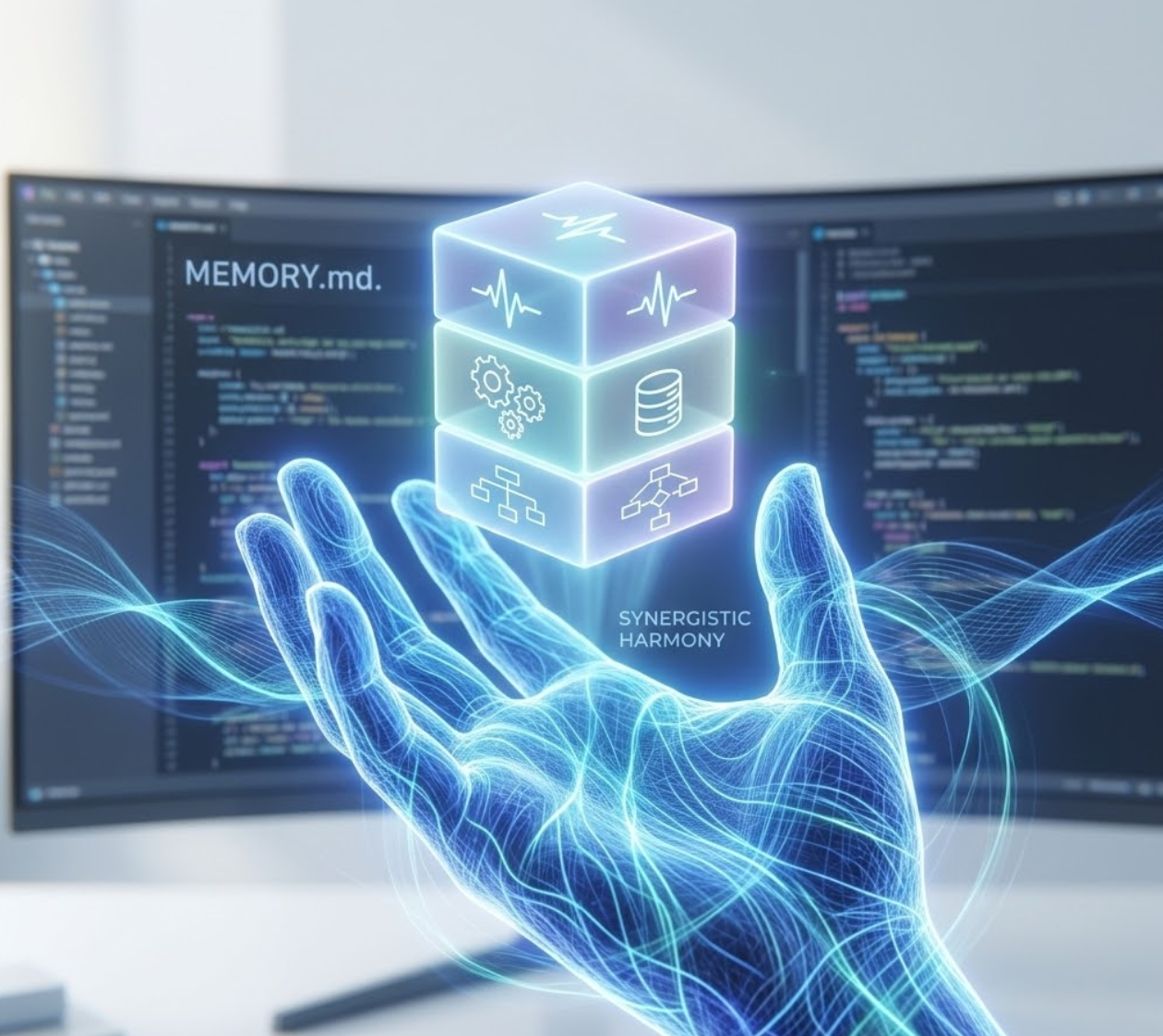
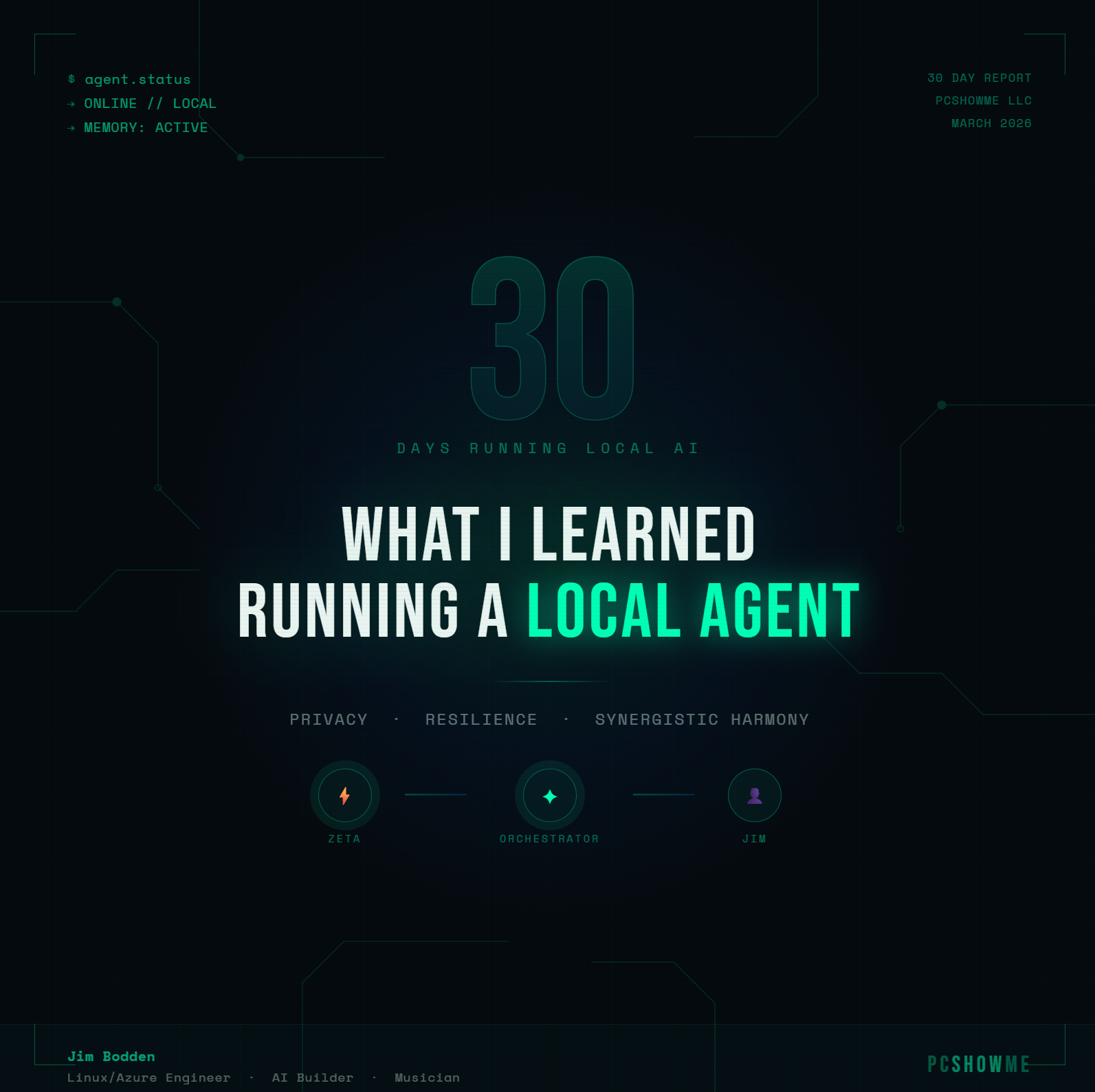
I gave my agent a name Zeta ;⚡ and a workspace. Memory files, daily notes, a long-term memory document. The agent reads them at the start of every session. It knows who I am, what I’m working on, what I care about. It picks up where we left off.
That’s not a chatbot. That’s a collaborator.
- Privacy is Underrated Until You Actually Have It
I work at the VA. Data sensitivity isn’t abstract for me it’s a professional reality. Running locally meant I could finally use AI assistance without filtering every single prompt through a “is this safe to send to a cloud provider?” mental checkpoint.
That cognitive overhead is real, and most people don’t realize how much energy it costs until it’s gone.
- The Real Bottleneck is Memory, Not Intelligence
The most valuable engineering work I did this month had nothing to do with model selection. It was building a memory architecture. Daily notes. A curated long-term memory file. A heartbeat system that checks in proactively and picks up unfinished work.
A brilliant model with no memory is a brilliant stranger you have to re-introduce yourself to every single day. Most AI interactions today are built on exactly that broken foundation.
The models are smart enough. The memory systems aren’t built yet. That’s where the real innovation is.
- Proactive > Reactive
Most people use AI reactively: they have a problem, they open a chat window, they get an answer, they close it.
I set mine up to run on a heartbeat; periodic check-ins where the agent reviews pending work, checks for anything that needs attention, commits workspace changes, and occasionally surfaces a fresh idea. It’s the difference between an employee who waits to be told what to do and one who shows up Monday morning having already thought about your week.
That shift alone is worth 30 days of experimentation.
- Synergistic Harmony is Real
I’ve talked about this concept for years. “Synergistic Harmony”, the idea that when humans and AI work together correctly, the result exceeds what either could produce alone. I believe it so deeply it’s the tagline for my company and the title of one of my songs.
But living it for 30 days made it concrete. My AI music production process is a perfect example: I start in prayer, I write lyrics and a musical structure document, I use all of that to prompt AI for candidates, I select the one that matches my vision, and then I add human touches that no AI would think to add. The result is better than what either a human or an AI would produce independently.
That’s not a workflow. That’s a philosophy made practical.
What I’d Tell Someone Starting Today
Start with the memory architecture, not the model. Pick a model that’s good enough and spend your energy on continuity. Your agent should know you.
Name it. This sounds silly. It isn’t. Naming something changes how you relate to it and how you build it. You’ll make better design decisions.
Run it locally if you can. The hardware investment pays back in privacy, resilience, and freedom from throttling faster than you think.
Give it something real to do. Don’t just use it for Q&A. Give it a project. A workspace. A job. The gap between “AI assistant” and “AI agent” is whether it has ongoing context and initiative. The other night I asked Zeta to autonomously create an application for me in Python during the night. When I woke I found she had not only wrote the Python script and committed it to Github, but, she had also setup GitHub Actions to set up a CI/CD pipeline and create a Windows executable — all from a simple “write me a Python GUI app” request!
And get out of the way. The hardest skill I developed this month was learning when to let the agent work and when to step in. That judgment, knowing when to be hands-on and when to trust the system, is the actual skill of AI leadership. Of course trust but verify is also critical and the correct balance here yields exponentially!
The Bottom Line
Running a local AI agent for 30 days didn’t just make me more productive. It changed how I think about intelligence, collaboration, and what “working together” actually means.
The future of AI isn’t you talking to a cloud. It’s you and an agent(s); that knows you, run on your terms, and show up every day ready to build something.
I’m just getting started. (This weekend I will be creating a new agent, Angel, and adding her to this framework).
Jim Bodden is a Linux/Azure Cloud Engineer, AI builder, musician, and Christian content creator. He runs pcSHOWme LLC, where “Synergistic Harmony” isn’t just branding, it’s a way of life.
Follow him on LinkedIn and YouTube @pcSHOWme for more on AI, creativity, and building things that matter.